

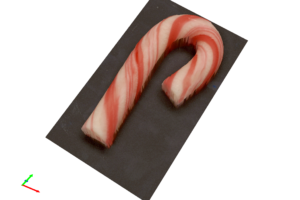
What Happens When Elves Discover Surface Metrology?
Recent Blogs What Happens When Elves Discover Surface Metrology? Candy
2025 Equipment Tax Benefits to Consider
Recent Blogs Equipment Tax Benefits for 2025! Is Now the
Reviving Legacy AFMs: How to Unlock New Capabilities
Recent Blogs Reviving Legacy AFMs: How to Unlock New Capabilities

Automotive Paint Layer Analysis with Microscopy & EDS | JH Technologies
Recent Blogs Automotive Paint Layer Analysis with Optical Microscopy, SEM,
What Is EBSD? A Guide to Electron Backscatter Diffraction in SEM
Recent Blogs A Guide to Electron Backscatter Diffraction (EBSD) Electron
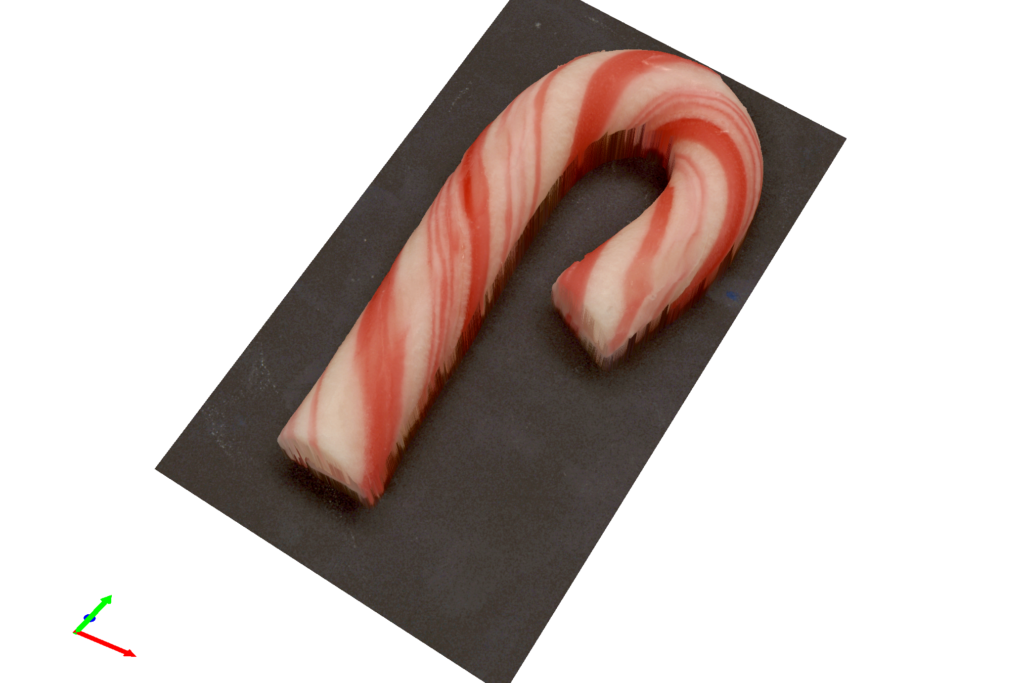
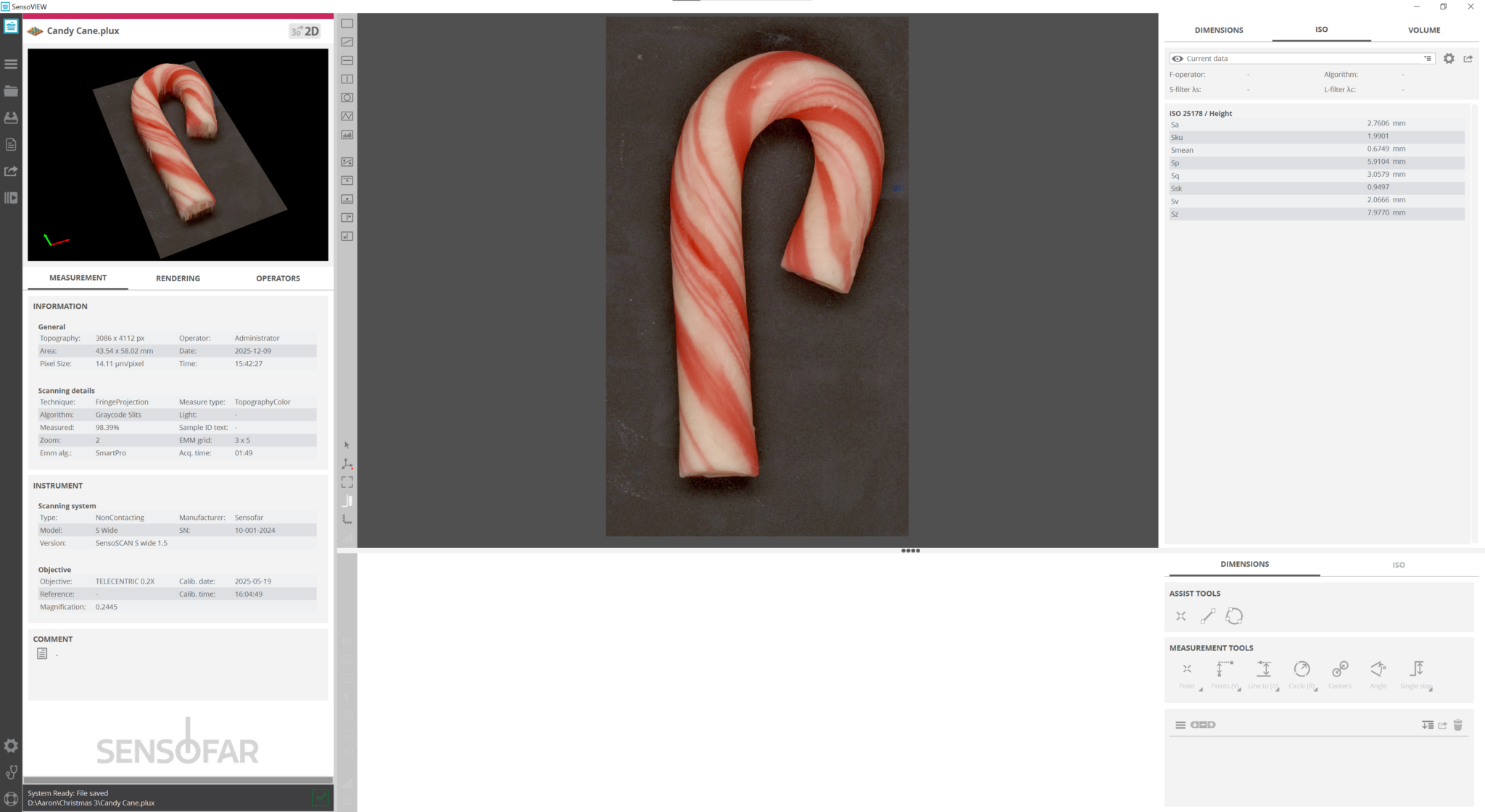
Surface Profiling Results: A Surprisingly Smooth Candy Cane
Despite its dramatic stripes, the candy cane’s surface turned out to be remarkably smooth. The glossy outer coating creates a nearly uniform topography, which the S wide captured in precise 3D detail.
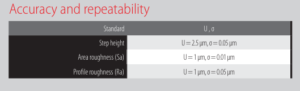
Based on the system’s specifications, we found no discernible height difference between the red and white stripes. In other words: visually bold, metrologically smooth.
This festive experiment confirms what we’ve long suspected—candy canes are a magical holiday treat, perfected down to the micron.
A Brief (and Totally Accurate) History of Candy Canes
Some historians—like Susan Benjamin of True Treats Historic Candy—suggest candy canes date back to a 17th-century German choirmaster who handed out sugar sticks to keep restless choirboys quiet. (Apparently preferable to “whacking them with a switch.”)
Charming story.
But let’s be honest—we all know candy canes are grown by elves at the North Pole. Case closed.

Conclusion: A Sweet Reminder of What Metrology Can Reveal
This holiday project proves that advanced optical metrology can turn even a candy cane into a fascinating topographic study. Sometimes the smoothest surfaces are hiding in plain sight.
That said, the Elf Quality Team had one final question:
Is it still that smooth at higher resolution?
Stay tuned—next month we’ll take a deeper dive into candy cane surface metrology using the Sensofar S neox.
Acknowledgment: Thanks to Our Applications Team and the short guys
Special thanks to our Applications Team and the crew at Santa’s candy factory for running the scans and confirming the quality of these tasty treats. Their creativity and expertise make fun, real-world demos like this possible.

Aaron Lowe applications engineer on-site at Elf factory Latitude 90 degrees North
Ready to See the Sensofar S Wide in Action?
Looking to explore surface profiling for your materials or components? We’re here to help you unwrap the full potential of optical metrology.
Connect with our team and request a quote today!