Buehler VibroMet 3 Vibratory Polisher for Precision Sample Preparation
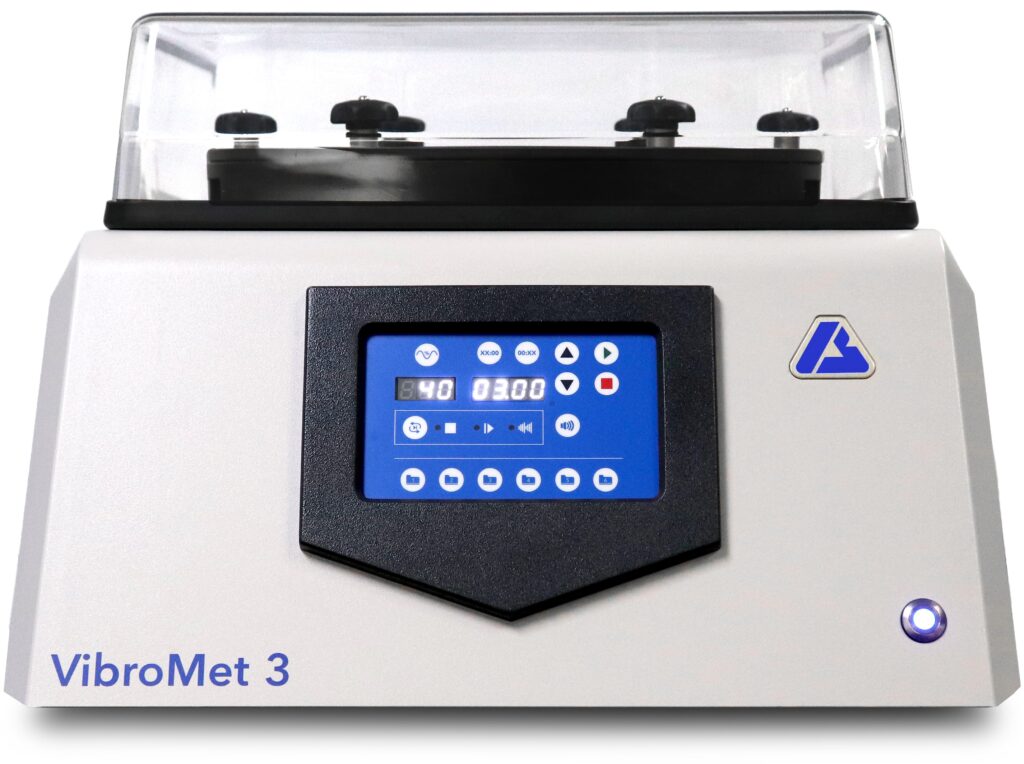
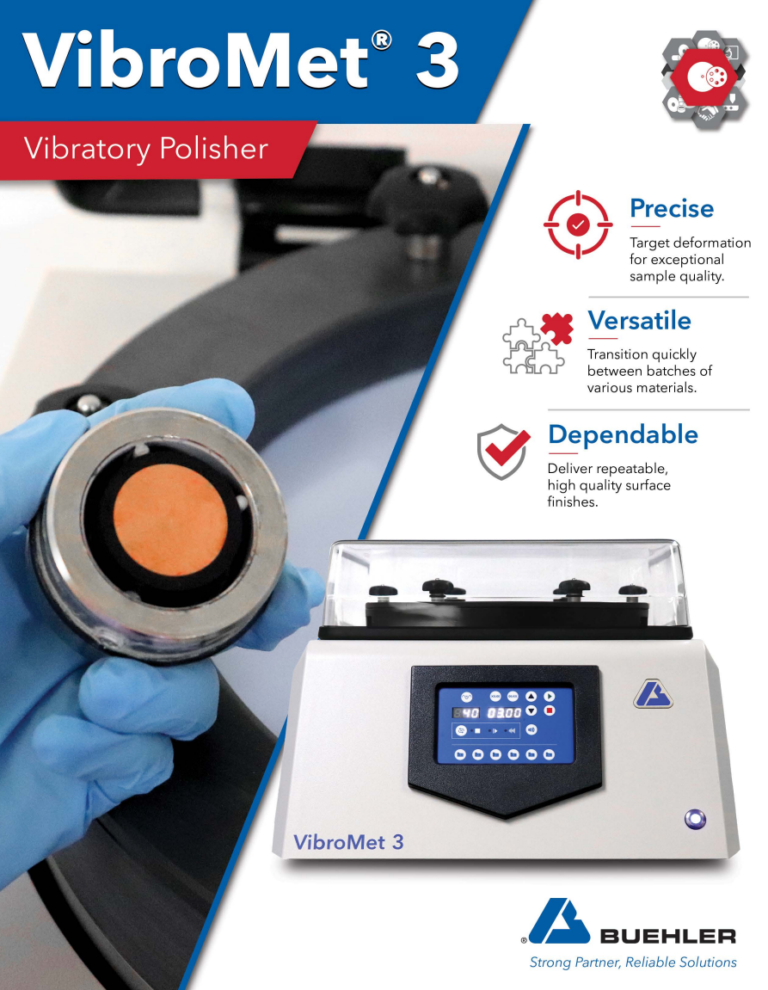
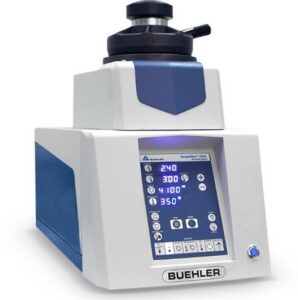
The Buehler VibroMet 3 is the newest precision vibratory polishing machine for metallographic sample preparation requiring deformation-free surfaces.
The horizontal-oscillating motor maximizes contact with the polishing surface as it moves and rotates samples around the working surface. This unique movement effectively eliminates the last traces of surface damage to create a mirror finish.— without the hazardous electrolytes of electropolishing or the cost of ion beam milling.
It is the standard final-polish step for EBSD (electron backscatter diffraction) sample preparation, AFM (atomic force microscopy)imaging, and any application where the worked surface layer from mechanical grinding and polishing must be eliminated.
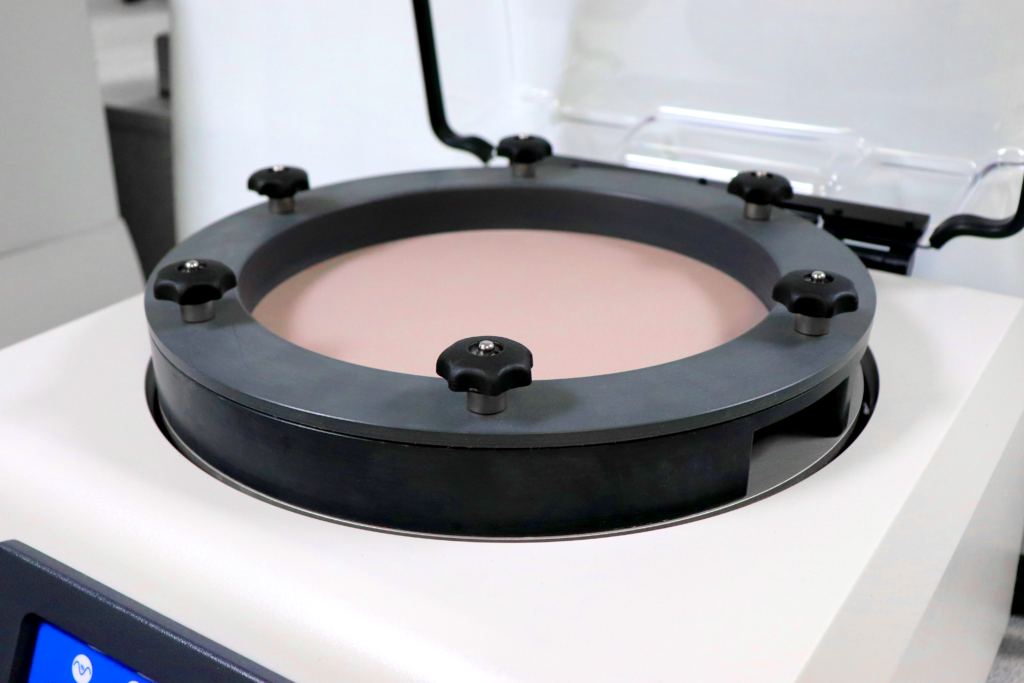
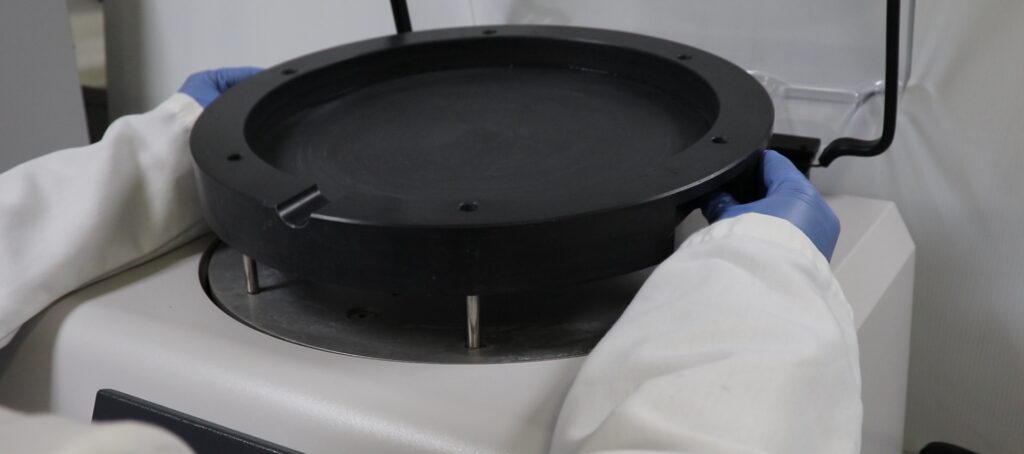
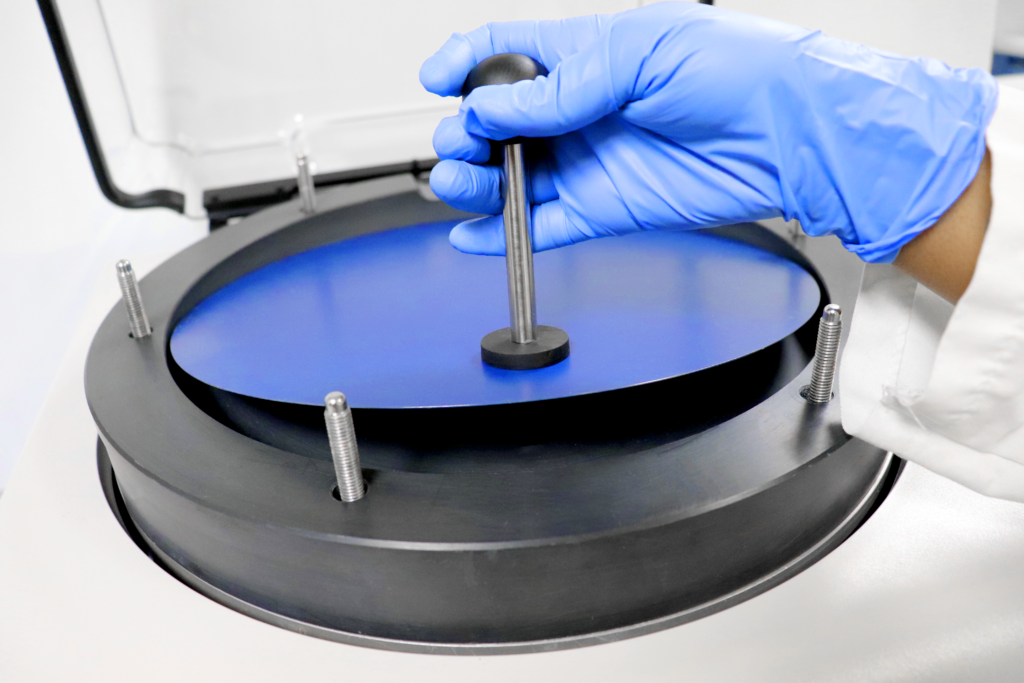
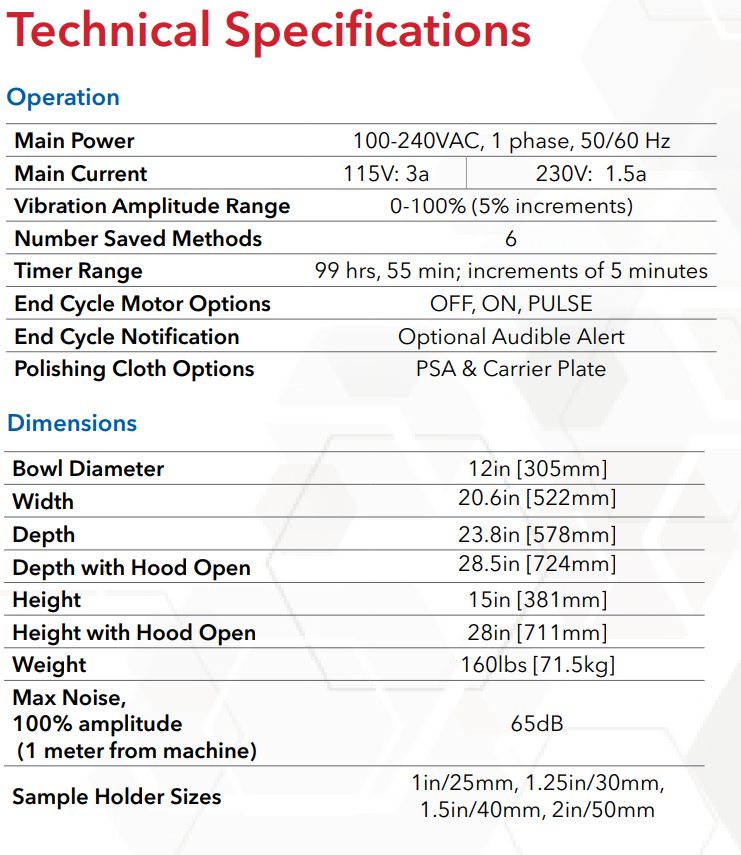
The VibroMet 3 mounts a polishing cloth — typically loaded with colloidal silica suspension — onto a 12″ (305mm) flat working surface. The motor drives horizontal oscillation, moving samples in a controlled circular path across the cloth. Unlike rotational grinder polishers, the horizontal motion applies low, consistent mechanical energy across the entire sample face — preserving microstructure at the surface and producing the sub-nanometer finish required for electron backscatter diffraction (EBSD) and atomic force microscopy (AFM).
Amplitude and cycle time control: Adjustable amplitude dial adapts to sample size, number of specimens, and material hardness
Saved Methods: Ensure consistency between sample batches and recall your unique parameters with the push of a single button. 6 storage slots allow users to develop and save methods for a wide array of applications.
End Cycle Control: Preventing crystallization is crucial for preserving sample integrity post-cycle. Upon cycle completion, select from options to either switch the motor OFF, maintain it ON, or activate Pulse mode, which stops the polish while preventing stagnation.
Polishing media: Compatible with colloidal silica suspension, colloidal alumina, and other final-polish suspensions — no hazardous electrolytes required.
Sample holders: Quick-load holders in 1″, 1.25″, 1.5″, and 2″ (25–50mm) sizes; loading fixture accommodates multiple sizes simultaneously
Vibratory polishing is the final step in metallographic sample preparation for applications that require a deformation-free surface. Use the VibroMet 3 when:
EBSD analysis: EBSD requires a surface free of mechanical deformation — any residual stress from grinding or rotational polishing scatters the diffraction pattern. Vibratory polishing with colloidal silica removes the worked surface layer without reintroducing strain.
AFM imaging: Atomic force microscopy requires sub-nanometer surface roughness. The low-energy horizontal oscillation achieves this without the edge rounding associated with rotational polishing.
Soft or multiphase materials: Soft phases (e.g., lead, tin, aluminum) or multiphase microstructures with significant hardness differences are easily over-polished by rotational systems. The VibroMet’s gentle, consistent action keeps relief between phases to a minimum.
Replacing electropolishing: For labs that need a stress-free surface but want to avoid the hazardous electrolytes and safety infrastructure required by electropolishers, vibratory polishing with colloidal silica is the safer, simpler alternative.
Deciding whether vibratory polishing is the right technique for your application?
JH Technologies is an authorized Buehler dealer serving labs across the United States. Contact our team for pricing, lead times, and to discuss whether the VibroMet 2 is the right final-polish step for your sample preparation workflow